What Food Pairs With Non-Alcoholic Red Wine?
A Tempranillo-style non-alcoholic red pairs with grilled meats, tomato dishes, hard cheese, mushrooms, and lentils, with a pairing table below.


A non-alcoholic Tempranillo-style red pairs best with grilled meats, tomato-based dishes, hard aged cheeses, mushrooms, and lentils. Its tannin and acid do the same job a full-strength red does at the table: cutting fat, matching richness, and standing up to char. The alcohol was never doing the pairing work, so removing it leaves the pairing logic intact.
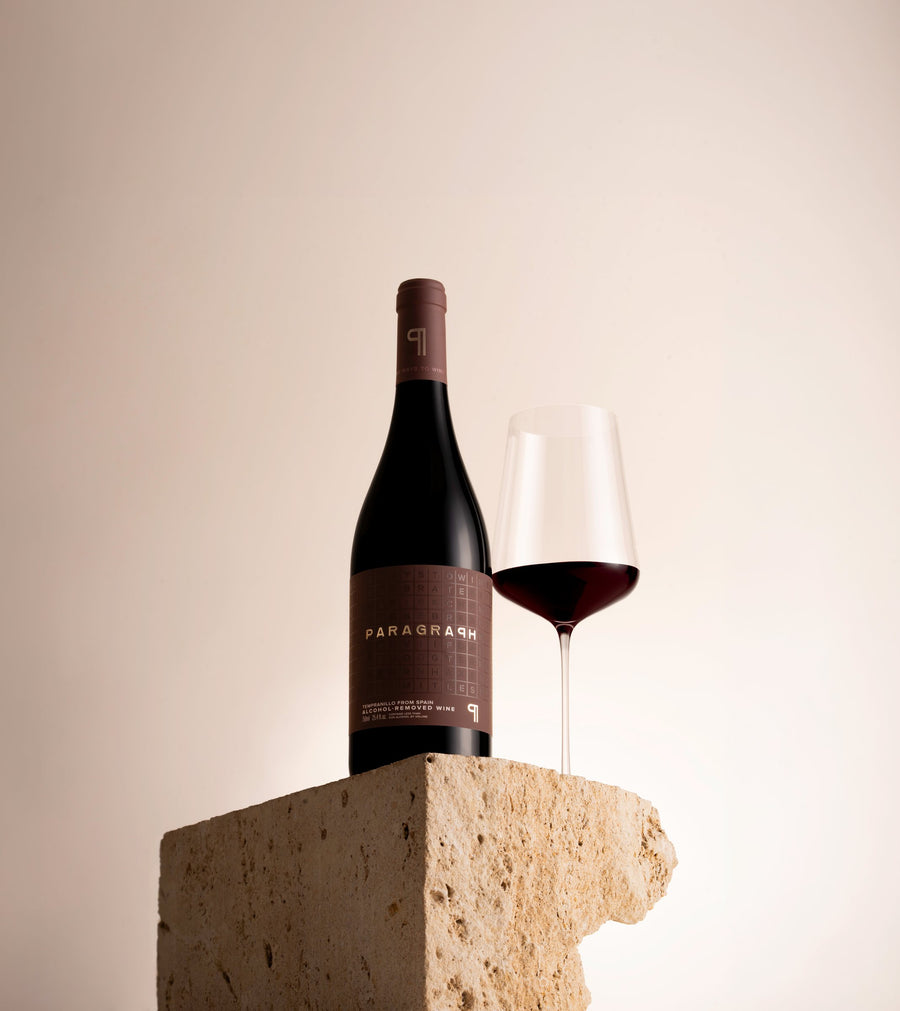
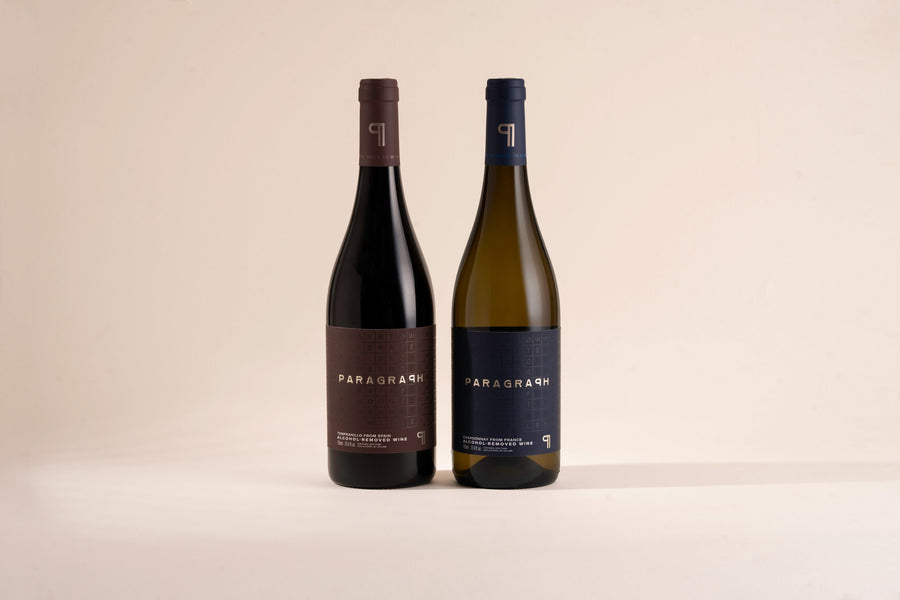
Most people assume alcohol is what makes wine work with food. Tannin, acid, and body carry a pairing. Alcohol adds warmth and a sense of weight. PARAGRAPH, an alcohol-removed Tempranillo, keeps its structure through vacuum distillation, so the wine still has something to offer a plate.
Why the old pairing rules still apply
Wine pairing rules are built on structure. Tannin binds to protein and fat, which is why a tannic red cuts through a fatty steak and holds its own next to it. Acid brightens rich or oily food. Body needs to roughly match the weight of the dish, so a light dish does not disappear next to a heavy wine.
None of that depends on alcohol content. A dealcoholized Tempranillo still carries tannin from skin contact during fermentation and still carries the acid structure it developed in the vineyard. The alcohol removal happens after fermentation, once the wine already has its shape. That is why the classic pairing logic for Tempranillo, built for grilled meat, tomato, and aged cheese, still holds. We explain how the wine keeps its tannin without the alcohol in a separate article.
Grilled and roasted meats give tannin something to cut
Char and fat are the two things tannin handles best. A grilled steak, lamb chops, or a roasted pork shoulder all bring rendered fat and a browned crust to the plate, and tannin cuts straight through both. The char itself picks up a faint bitterness that echoes the wine's own structure.
Tomato-based dishes need matching acidity
Tomato sauce is high in acid, and a wine with matching acidity keeps the pairing balanced. Without that acid, the sauce tastes flat and the wine tastes sour. Tempranillo's acidity sits close to tomato's, which is part of why Spanish reds became the standard pour with tomato-heavy Spanish and Italian cooking.
Hard, aged cheeses work better than soft ones
Manchego, aged cheddar, and other firm cheeses bring concentrated fat and salt. Tannin cuts the fat, and the wine's fruit softens the sharper edges of an aged cheese. Soft, high-moisture cheeses tend to fight tannin, so firmer styles are the safer match.
Mushrooms and lentils carry enough weight to meet the wine
Mushrooms and lentils carry earthy, umami-heavy flavors that pair naturally with a red built around dark fruit and light earth notes. Both ingredients also have enough body and richness to stand up to a structured red without alcohol adding extra weight.
Six pairings to start with
| Food | Why it works | |---|---| | Grilled steak or lamb | Tannin cuts fat and char | | Roasted pork | Tannin balances rendered fat | | Tomato pasta or braised dishes | Matching acidity keeps the pairing balanced | | Aged Manchego or cheddar | Tannin cuts salt and fat | | Mushroom risotto or ragu | Earthy notes echo the wine's structure | | Lentil stew | Body and earthiness match the wine's weight |
How to build a pairing at home
- Start with the dominant flavor on the plate: fat, acid, salt, or earth.
- Match fat with tannin. A fattier dish can carry a more tannic pour.
- Match acid with acid. High-acid sauces need a wine with acidity behind the fruit.
- Match weight with weight. Save the wine for dishes with enough body to meet it.
- Serve it cool, 57 to 61°F (14 to 16°C), so the tannin does not feel harsh against the food. Our guide on what temperature to serve a non-alcoholic red has the detail.
The category has grown fast enough that grocery and restaurant menus are catching up. US non-alcoholic sales passed $1 billion off-premise in 2025, up 22% (NIQ, 2025 year in review). More people are building these pairings into everyday dinners and treating the bottle as a regular fixture on the table.
If you want to test these pairings with a wine built to carry them, PARAGRAPH Tempranillo is made for the table.
Common questions
Does non-alcoholic red wine pair the same as regular red wine?
Largely yes. Tannin, acid, and body drive a pairing, and a well-made dealcoholized red keeps all three intact.
What should I avoid pairing with a non-alcoholic Tempranillo?
Delicate dishes like raw fish or light salads can get overwhelmed by tannin. Save the wine for something with fat, char, or earthiness to meet it.
Can I serve non-alcoholic red wine with cheese boards?
Yes, if you lean toward firmer, aged cheeses. Soft cheeses tend to clash with tannin more than complement it.
Does chilling change how the wine pairs?
Serving it cool, 57 to 61°F (14 to 16°C), keeps tannin in check and can make the pairing feel more balanced than at full room temperature.

Duncan Shouler
Head Winemaker at PARAGRAPH, formerly Chief Winemaker at Giesen. Duncan has spent eight years making alcohol-removed wine.
More from Duncan