How Do You Keep Tannin and Structure in Non-Alcoholic Wine?
Removing alcohol strips body from wine. Winemaker Duncan Shouler explains how grape selection and extraction hold tannin and structure once the alcohol is removed.


Keeping tannin and structure in a non-alcoholic wine starts before the alcohol comes out. It comes from grape selection and from choosing base wine with enough natural tannin and structure to survive the process. Alcohol carries weight and body in wine, so removing it leaves a gap. You fill that gap during winemaking, before the alcohol leaves the wine.
This is the question I get from people who have had a thin, watery non-alcoholic red and assumed that is what the category tastes like. It does not have to be. The thinness comes from decisions made before the alcohol removal step, and most producers put too little thought into them.
Alcohol removal costs you body, and no still can give it back
Alcohol has weight and texture in wine. It contributes to what winemakers call body, the sense of fullness and richness a wine has in your mouth. Take alcohol out of a wine and you lose a meaningful part of that mouthfeel, even if you preserved every bit of aroma through careful vacuum distillation.
This is separate from the flavor loss that comes from a harsh dealcoholization process. Even a well-run process at about 30°C still removes a component that was contributing texture. You cannot distill your way around that. You have to build the wine with enough structure going in that losing the alcohol leaves it whole.
Grape selection is where structure starts
We start with Tempranillo grown at high altitude in Spanish vineyards. Altitude matters here specifically. Vines at higher elevation deal with bigger swings between daytime and nighttime temperature, and that swing slows sugar ripening relative to the development of tannin and color compounds in the skins. The grapes end up with thicker skins and a higher ratio of tannin and phenolic compounds to sugar than the same variety grown at lower, warmer sites.
That matters once you know the alcohol is coming out later. A grape that develops rich tannin and phenolic structure alongside its sugar gives you a wine with a backbone that can survive losing its alcohol. A grape chosen only for easy ripening and soft fruit will make a wine that is pleasant at full strength and disappointing once the alcohol is gone.
Extraction during fermentation decides how much tannin makes it in
How you handle the grapes during fermentation decides how much of that tannin and color reaches the wine. Techniques like extended maceration, where the wine sits in contact with grape skins longer, and careful cap management, working the skins that float to the top during fermentation, pull more tannin and structural compounds into the finished wine before anything gets distilled.
We place huge emphasis on the importance of tannin extraction and wine structure. The base red wine must have ample natural tannin to give classic red wine structure, but not so much that the finished wine looks overly astringent or bitter. Our base wine goes to the still at 2 to 4 years of age.
What removing alcohol does to the wine you built
Once the wine has been fermented and built with this structure in mind, vacuum distillation pulls the alcohol out at low temperature, protecting the aroma compounds. I compare the two main methods in spinning cone vs vacuum distillation. What neither method can protect is body. The wine comes out lighter in weight and mouthfeel than it went in, full stop.
What you can do is make sure the tannin, acidity, and phenolic structure built into the wine during fermentation are strong enough that the wine still has a shape and a finish after that body loss. A wine with tannin still grips the sides of your mouth and has a defined finish, even at lower body, because tannin and acidity depend far less on alcohol than body does. Our finished alcohol-removed wine sits at 11 g/L residual sugar, pH 3.66 and total acidity 4.47 g/L.
Blending after distillation balances what is left
During the development phase of each wine, we dealcoholize several base wine components to assess them individually, then trial-blend them to dial in acidity and tannin balance in the finished wine. The category's growth gives us more room to be selective about this. US non-alcoholic wine sales grew 29.1% in 2025 while total US wine sales fell 4.9% (NIQ, 2025 year in review), and Grand View Research put the US non-alcoholic wine market at about $1.1 billion in 2025. That growth means more attention and more investment going into doing this stage well.
What a structured non-alcoholic red feels like in the glass
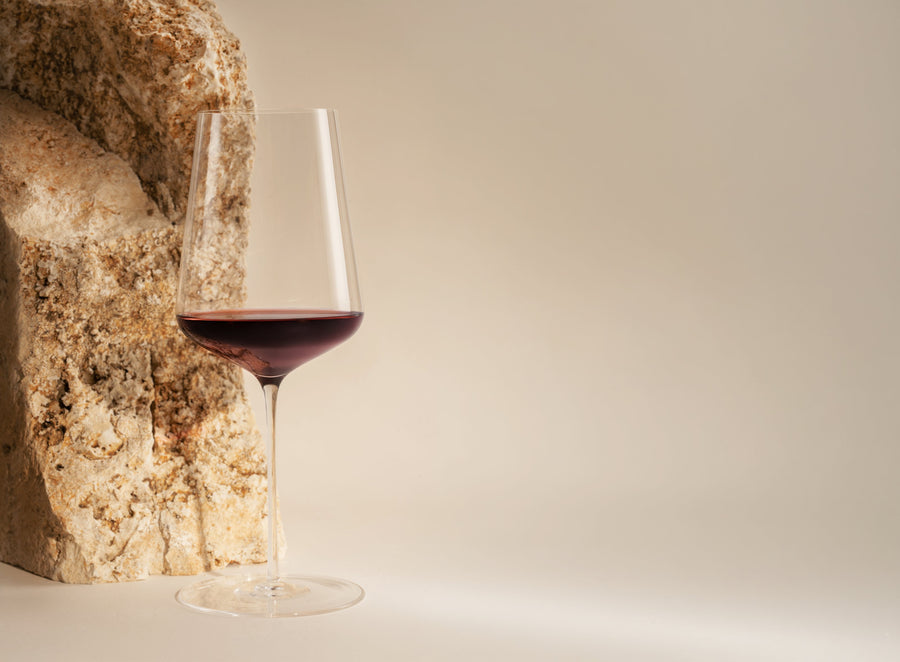
A non-alcoholic red built this way still has a defined mid-palate, tannin that grips and holds, and a finish that lasts more than a second or two. It will not have the same body as its full-strength counterpart. No alcohol-removed wine will. It should never taste like colored water with fruit flavoring stirred in, either. For a checklist of what to look for on the shelf, see what makes a good non-alcoholic red.
I tell people this: "Structure is decided in the vineyard and the fermenter. By the time the wine reaches the still, the tannin it has is all the tannin it will ever have."
That is the standard we hold PARAGRAPH Tempranillo to, starting with the grape and carrying through every decision before the alcohol comes out.
Common questions
Does non-alcoholic wine have tannin?
Yes, if the base wine had it. Tannin comes from grape skins and seeds during fermentation and stays in the wine when the alcohol is removed. A thin non-alcoholic red usually started from a base wine with too little tannin.
Why does non-alcoholic wine taste thin?
Alcohol contributes body and texture, and removing it leaves the wine lighter. Producers who did not build extra tannin and acidity into the base wine end up with a hollow result.
Can you add tannin back after dealcoholization?
Tannin additions exist in winemaking. We add none. Ours comes from the grape, because tannin extracted from the grape integrates with the wine better than tannin added late.
Why does high-altitude fruit matter for a non-alcoholic wine?
Cold nights at altitude slow sugar ripening while skins keep building tannin and color. That gives a higher ratio of structure to sugar, which is what survives alcohol removal.

Duncan Shouler
Head Winemaker at PARAGRAPH, formerly Chief Winemaker at Giesen. Duncan has spent eight years making alcohol-removed wine.
More from Duncan