What Makes a Good Non-Alcoholic Red? What to Look for on a Label
Judge a non-alcoholic red on five criteria: tannin, sugar, alcohol-removal method, grape and origin, and a stated ABV. Check each one on the label.

A good non-alcoholic red wine has tannin and structure from a full fermentation, residual sugar around 1 g per 100 mL, an alcohol-removal method that protects aromatics, a named grape with a clear origin, and an ABV under 0.5% stated plainly on the label. Check those five things before you check the price.
Most non-alcoholic reds fail on at least one of them. This guide shows how to read a label and tell the difference.
Tannin has to come from a full fermentation
Red wine tannin comes from grape skins, seeds and stems during fermentation. It gives a red wine grip on the palate, the sensation that makes a Cabernet feel different from a rosé. When a winery removes alcohol carelessly, aggressive heat can strip that structure along with the alcohol, leaving a thin, juice-like liquid.
A label will not state "tannin level" directly, but it will tell you the grape and whether the wine was made using a low-temperature method. Full-bodied red grapes with naturally high tannin, like Tempranillo or Cabernet Sauvignon, give the winemaker more structure to preserve. Look for wording like "full-strength wine, then alcohol-removed", which signals fermentation up front. That order of operations matters. It means a wine was made first, with fermentation and tannin, before the alcohol was removed.
Sugar near 1 g per 100 mL reads as dry
Some non-alcoholic reds lean on noticeable sweetness to cover thin structure. Sweetness reads as body on the palate, but it is no substitute for tannin. Check the nutrition panel for grams of sugar per serving. A well-made non-alcoholic red sits close to 1 g of sugar per 100 mL, in the range of a dry table wine. If the label lists 4 g or more per 100 mL, expect a sweeter, less wine-like profile.
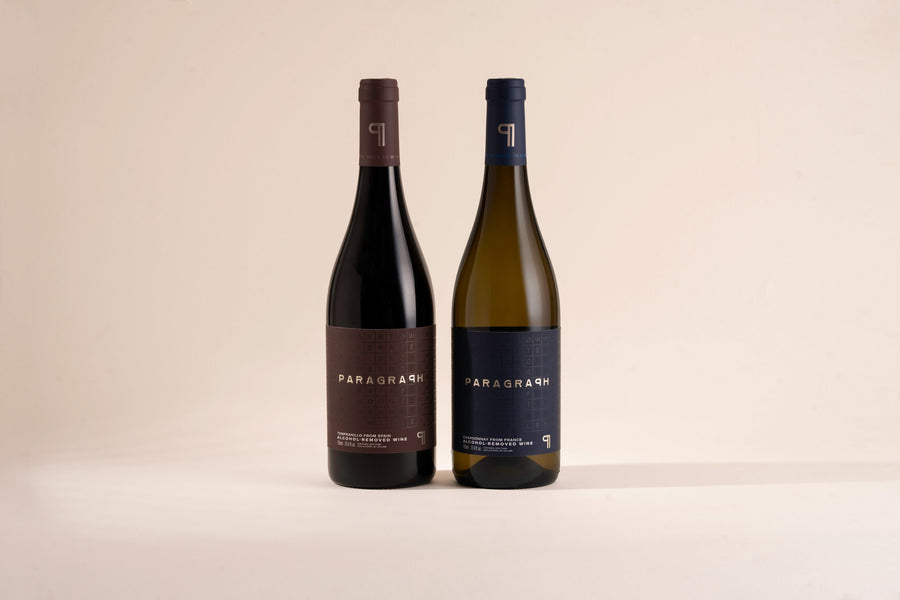
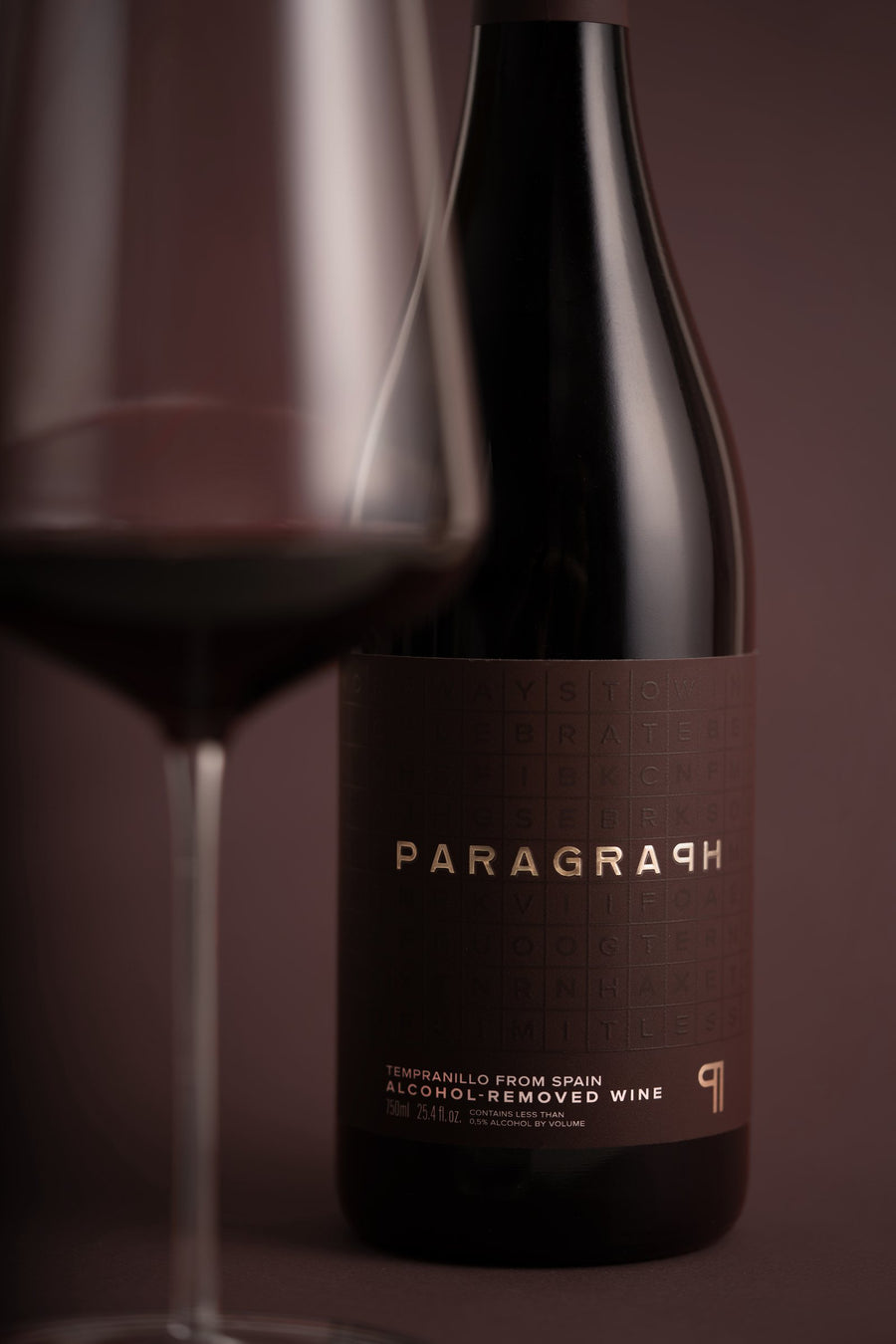
For reference, PARAGRAPH has about 1 g of sugar per 100 mL and 25 calories per 5 oz (148 mL) serving, both on the nutrition tab of the product page.
Low-temperature alcohol removal keeps the aromatics
Two methods dominate serious dealcoholized wine: vacuum distillation and the spinning cone column. Both remove alcohol at low temperature to protect the wine's aromatics. Cheaper, high-heat methods can flatten flavor and leave a cooked character. If a label names its method, the producer is confident enough in the process to disclose it. If it does not say, ask.
Heat destroys aroma. Take the alcohol out under vacuum, at low temperature, and the wine keeps the fruit it was fermented with. The full process is set out in how non-alcoholic wine is made.
A named grape and a real origin give you something to judge
A wine that names its grape and where it is grown gives you something to evaluate. Tempranillo, grown at high altitude, ripens with good acidity and firm tannin, both of which help a wine hold its shape once the alcohol is gone. High-altitude fruit sees a wider swing between warm days and cool nights, which builds structure and aromatic intensity in the grape before it is ever fermented. A label that is vague about grape and growing region is harder to trust, because there is less for the winemaker, or you, to point to as the source of quality.
Look for the ABV printed as a number
Under FDA rule CPG Sec. 510.400, a wine can be labeled "non-alcoholic" if it is under 0.5% ABV and the words "dealcoholized" or "alcohol-removed" appear in the statement of identity. Check that the label states the number. A precise figure, like "under 0.5%", tells you more than the word "non-alcoholic" alone.
More entrants mean more variation in quality
The category is growing fast enough that quality control matters more each year. US non-alcoholic wine sales grew 29.1% while total US wine sales fell 4.9% in the same period (NIQ, 2025 year in review), and the market is projected to reach $2.0 billion by 2033 (Grand View Research, 2025). More entrants means more variation in quality. Read the label. Skip the marketing copy.
PARAGRAPH was named Best Non-Alcoholic Wine at the Rolling Stone Spirit Awards 2026, and the five checks above are the ones the wine was built to pass.
PARAGRAPH is built around these five criteria: a 100% Tempranillo from high-altitude Spanish vineyards, made full-strength first, then alcohol-removed by vacuum distillation to under 0.5% ABV, with about 1 g of sugar per 100 mL.
Common questions
Does non-alcoholic wine have tannin?
Yes, when it is made from a full-strength red wine that is fermented normally before the alcohol is removed. The tannin comes from the grape skins during that fermentation, well before the alcohol-removal step.
Is added sugar in non-alcoholic red wine a problem?
Added sugar changes what you taste. A wine with 1 g of sugar per 100 mL reads dry, like a standard table wine. Higher sugar levels move the wine toward a sweeter, less structured profile.
What is the difference between vacuum distillation and the spinning cone column?
Both remove alcohol at low temperature to protect aromatics. Vacuum distillation lowers the boiling point of alcohol so it evaporates without heat damage to the wine. The spinning cone column spins the wine into thin films across a series of cones, stripping alcohol in stages.
Does grape variety matter in a non-alcoholic red?
Yes. Grapes with naturally firm tannin and good acidity, grown in conditions that build structure, like high-altitude sites, give the winemaker more to work with once the alcohol is removed.
What ABV counts as non-alcoholic?
Under FDA CPG Sec. 510.400, wine under 0.5% ABV can carry a "non-alcoholic" label when "dealcoholized" or "alcohol-removed" also appears in the statement of identity.

Duncan Shouler
Head Winemaker at PARAGRAPH, formerly Chief Winemaker at Giesen. Duncan has spent eight years making alcohol-removed wine.
More from Duncan