The Best Non-Alcoholic Spanish Red (Tempranillo), Explained
A winemaker explains why Tempranillo, grown at high altitude in Spain, keeps its structure and flavor once the alcohol comes out at under 0.5% ABV.

Tempranillo grown at high altitude makes the best base for a non-alcoholic red because it ripens with firm tannin and strong natural acidity, the two things a wine needs to keep its shape once the alcohol is removed. I have spent eight years making alcohol-removed wine, and grape choice matters more than almost any other decision.
This grape, from this kind of site, works for reasons I can lay out. Below is what to expect when you taste it.
Thick skins give Tempranillo tannin to spare
Tempranillo is a thick-skinned red grape native to Spain, and thick skins mean more tannin. Tannin is the structural backbone of a red wine, the thing that gives it grip and a sense of weight in the mouth. When you remove alcohol from a wine, you lose the warmth and some of the perceived body that alcohol provides. A grape with strong native tannin has more to fall back on. Thin-skinned, lighter grapes lack that reserve, and you taste the loss. How we hold onto that structure without the alcohol is the subject of keeping tannin and structure at zero.
Tempranillo also carries good acidity through ripening, which matters as much as the tannin. Acidity keeps a wine feeling alive on the palate. In our base wine that shows as a total acidity of 4.35 g/L and a pH of 3.77. Between the tannin and the acid, Tempranillo gives me the most to work with as a winemaker building a serious non-alcoholic red.
High altitude builds structure before fermentation
High-altitude vineyards see a bigger swing between hot days and cold nights than lower sites. That swing, which viticulturists call diurnal range, slows sugar accumulation in the grape relative to the development of tannin, color and acidity. The fruit ends up with more concentrated structure and more aromatic complexity for a given level of ripeness. That is the raw material I want before a single drop of alcohol comes out.
The fruit comes from high-altitude Spanish vineyards, and that altitude does measurable work in the glass.
Alcohol comes out only after a full fermentation
The wine is made in full first. Full fermentation, full extraction from the skins, full alcohol, the same as any serious red. Only after that is the alcohol removed, using vacuum distillation. That method lowers the pressure in a sealed chamber, which lowers the boiling point of the alcohol so it evaporates at about 30°C, against about 78°C at normal atmospheric pressure. Lower temperature means less damage to the aromatic compounds that give the wine its character. The line I use with sommeliers is this: "Heat is the enemy. A wine cooked at high heat to strip alcohol tastes cooked. A wine handled at low temperature keeps its fruit and keeps the tannin it built in fermentation." I set the two main methods side by side in spinning cone vs vacuum distillation.
The result is an alcohol-removed wine under 0.5% ABV, with about 1 g of sugar per 100 mL and 25 calories per 5 oz (148 mL) serving, in line with a dry red.
A good non-alcoholic Tempranillo keeps its color, grip and finish
A well-made non-alcoholic Tempranillo should have deep color, a grippy, tannic mid-palate and a finish that holds. It should taste like a wine that had alcohol removed after a full fermentation. If a Spanish non-alcoholic red tastes thin, sweet or short, the grape or the method let it down somewhere before it reached the bottle.
Demand for a serious non-alcoholic red is growing
Interest in this style has grown faster than the wine category overall. US non-alcoholic wine sales rose 29.1% while total US wine sales fell 4.9% over the same period (NIQ, 2025 year in review), and the US market is projected to reach $2.0 billion by 2033 (Grand View Research, 2025). More people are asking for a red that holds up on its own terms. PARAGRAPH was named Best Non-Alcoholic Wine at the Rolling Stone Spirit Awards 2026, and the wine judged there is the one described above.
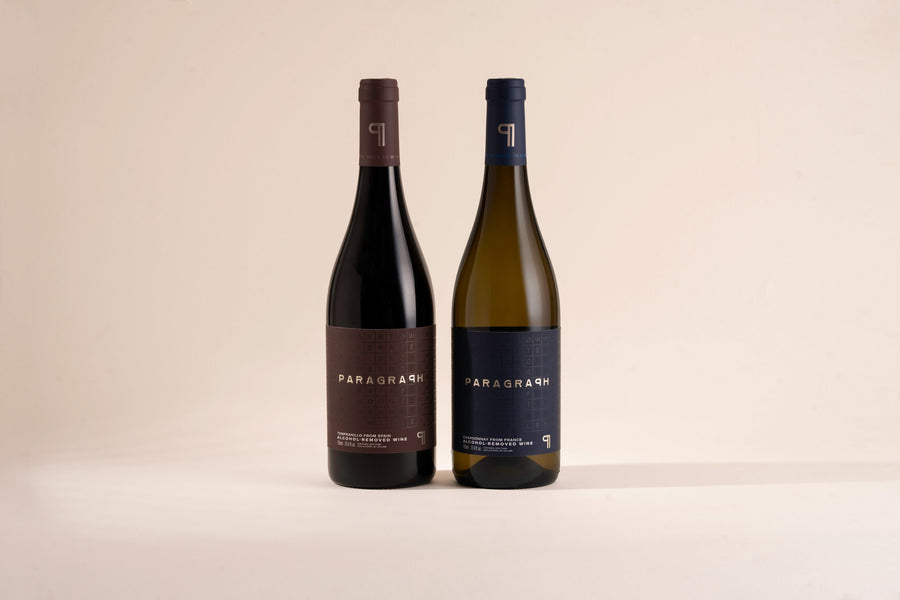
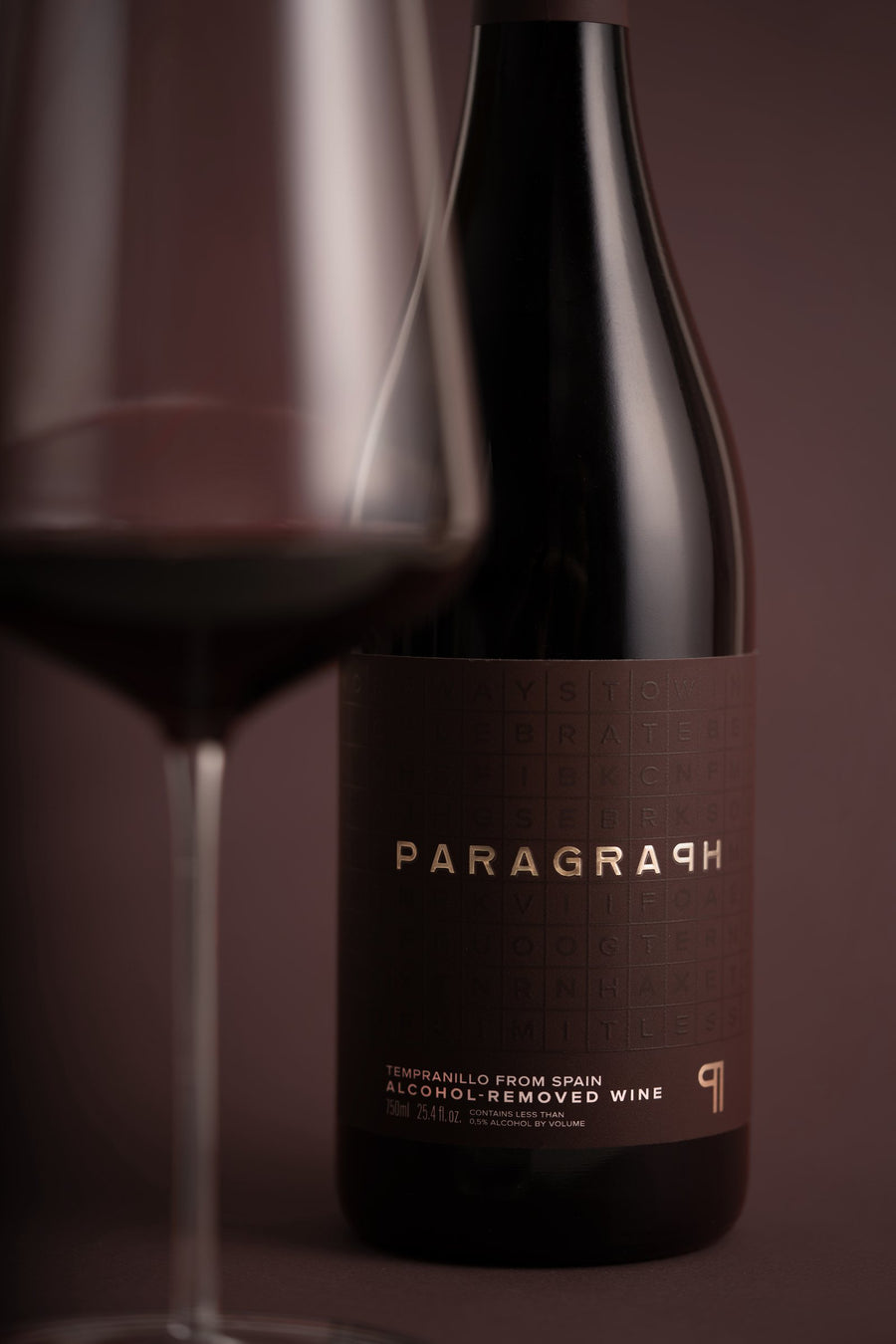
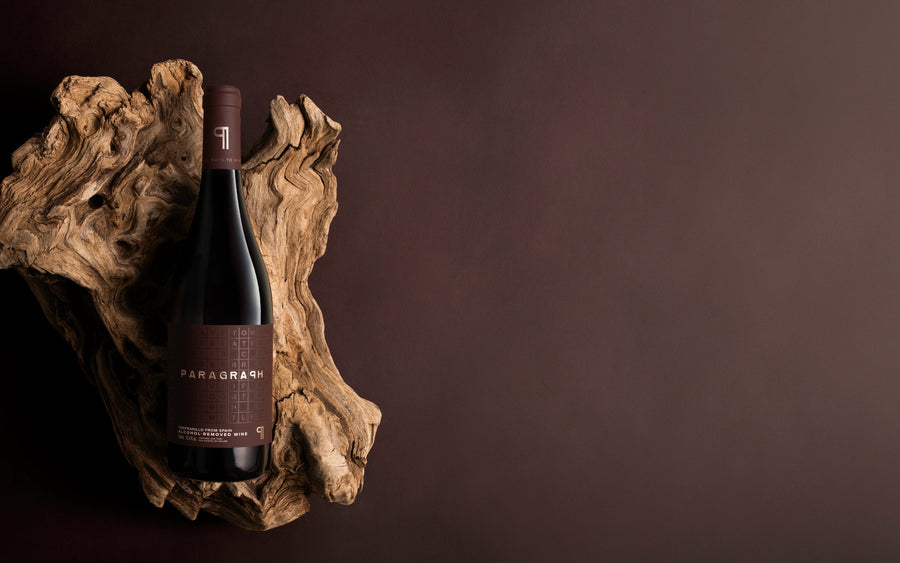
PARAGRAPH is my answer: 100% Tempranillo, grown in high-altitude Spanish vineyards, fermented fully, then alcohol-removed by vacuum distillation to under 0.5% ABV.
Common questions
Is Tempranillo the best grape for non-alcoholic red wine?
It is the best base I have worked with. Thick skins give it firm tannin, and it keeps its acidity through ripening, so the wine still has grip and freshness once the alcohol is gone.
Does high altitude change how a non-alcoholic wine tastes?
Yes. The wider gap between day and night temperatures slows sugar accumulation while tannin, color and acidity keep developing, so the grape arrives at the winery with more structure and aroma per unit of ripeness.
How much sugar is in a non-alcoholic Tempranillo?
PARAGRAPH carries about 1 g of sugar per 100 mL and 25 calories per 5 oz (148 mL) serving, in line with a dry red. Some non-alcoholic reds are noticeably sweeter to make up for lost body, and the nutrition panel will show it.
Where do the grapes for PARAGRAPH come from?
High-altitude Spanish vineyards. The wine is fermented in full, then the alcohol is removed by vacuum distillation to under 0.5% ABV.

Duncan Shouler
Head Winemaker at PARAGRAPH, formerly Chief Winemaker at Giesen. Duncan has spent eight years making alcohol-removed wine.
More from Duncan