Which Red Non-Alcoholic Wine Should I Buy in 2026?
A founder's guide to choosing a non-alcoholic red in 2026 by occasion: weeknight, dinner and gift, with what matters at each and what to check on a label.


Buy a non-alcoholic red with tannin, low sugar and a stated ABV under 0.5%, then match the bottle to the occasion. A weeknight glass should be easy to open and pour. A dinner bottle needs structure that holds next to food. A gift needs a story worth telling. That gap is why I started PARAGRAPH.
I get this question constantly, usually from people who tried one non-alcoholic red a few years ago, disliked it and never went back. I was one of them.
Start with what is in the glass
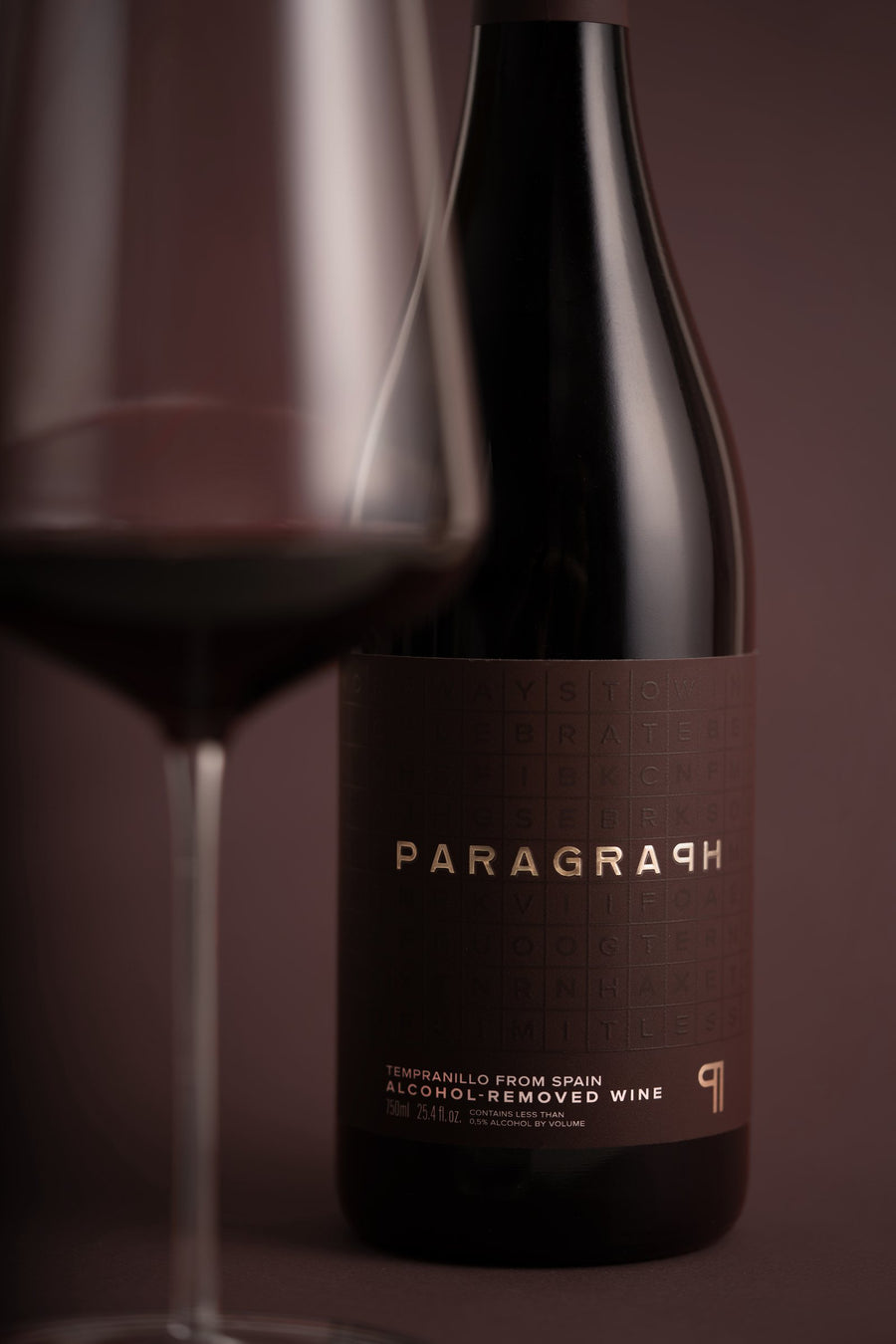
Before you get to occasion, get the fundamentals right. A non-alcoholic red is only as good as the wine it started as. If a producer skipped fermentation and built a blend from the start, you will taste it: thin, sweet, flat. The reds worth buying are made full-strength first, fermented like any other wine, then have the alcohol removed at low temperature, usually by vacuum distillation. That order preserves tannin and aromatics, and it is why the identity term on a serious label reads "alcohol-removed". Check the label for grape variety, a stated ABV under 0.5% and sugar close to 1 g per 100 mL. If a bottle is vague on all three, move on.
A weeknight bottle should pour without ceremony
Most nights I want a glass that asks little of me. That means something with enough acidity and grip to stand on its own, poured at room temperature or slightly cool. Tempranillo works well here. It is a grape that holds structure after the alcohol comes out, so a weeknight pour still tastes like wine. I keep a bottle open in the fridge and pour a glass the way I would a regular red, with the same glassware and the same lack of ritual.
At dinner, sugar and thinness show up fast
When wine sits next to food, a sweet non-alcoholic red gets lost beside a steak or fights with tomato sauce. What you want at the table is a wine with tannin that can stand up to protein and fat, and enough acidity to cut through richness. This is where grape and origin matter more. Tempranillo grown at high altitude ripens with firm acidity even as it builds sugar, which is part of why it holds its structure once the alcohol is gone. Serve it like any red at dinner, slightly below room temperature, in a regular wine glass. My pairing notes are in what food pairs with non-alcoholic red wine.
A gift bottle needs a story on the label
A gift bottle needs a reason to exist beyond "it's non-alcoholic". The people I buy this for are usually hosting someone who has stopped drinking, or they are cutting back themselves and want a bottle that reads as a choice. What matters here is the story on the label: a real grape, a real place, a real winemaker. The line I want to be able to say when I hand it over is this: "This is 100% Tempranillo from high-altitude Spanish vineyards, made by a winemaker who built a benchmark 0% program as chief winemaker at Giesen." PARAGRAPH was named Best Non-Alcoholic Wine at the Rolling Stone Spirit Awards 2026, which is a second line for the gift tag.
The category is growing faster than wine overall
US non-alcoholic wine sales grew 29.1% while total US wine sales fell 4.9% over the same period (NIQ, 2025 year in review), and the market is on track to roughly double by 2033 (Grand View Research, 2025). Part of that is demographic. Only 54% of US adults say they drink alcohol, matching the record low set the year before (Gallup, July 2026). Among adults aged 18 to 34 the figure is 50%, and 51% of adults now say one or two drinks a day is bad for health. More people are looking for a red that works at dinner on its own terms.
Buy for what you will do with the bottle
Read the label itself, the grape, the ABV and roughly how much sugar is in it, and you already know more than most people shopping this category. Then pick the bottle for the occasion in front of you. A weeknight glass, a dinner and a gift ask different things of a wine, and the labels that answer all three are few.
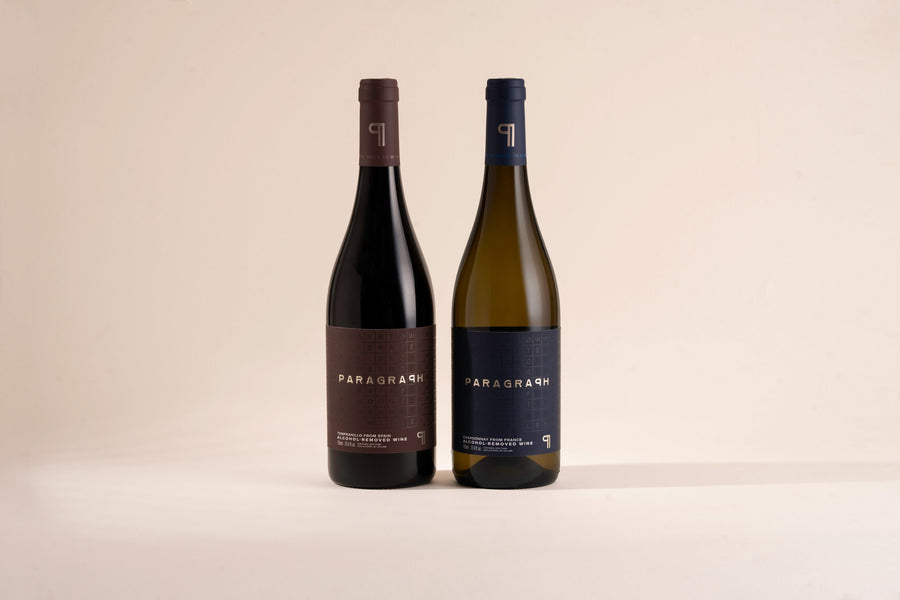
PARAGRAPH is what I built to answer my own version of this question: a 100% Tempranillo from high-altitude Spanish vineyards, alcohol-removed to under 0.5% ABV, made to hold up whether you pour it on a Tuesday or set the table for something bigger.
Common questions
What non-alcoholic red should I open on a weeknight?
One with enough acidity and tannin to taste like wine on its own, poured without ceremony. A non-alcoholic Tempranillo holds its structure after the alcohol comes out, which makes it an easy default.
Does non-alcoholic red wine pair with food?
Yes, if it has tannin and acidity. Sweet, thin non-alcoholic reds get lost beside rich food. A dry style with sugar near 1 g per 100 mL stands up to steak, roast vegetables and tomato-based dishes.
Is non-alcoholic red wine a good gift?
It is when the label gives the recipient a story: a named grape, a named region and a named winemaker. A bottle that only says "non-alcoholic" on the front reads as a consolation.
What should I check on a non-alcoholic red wine label?
The grape variety, a stated ABV under 0.5%, sugar close to 1 g per 100 mL, and the words "dealcoholized" or "alcohol-removed" in the statement of identity. If the label is vague on all of these, move on.

Steve Arora
Founder of PARAGRAPH.
More from Steve