How to Choose the Best Non-Alcoholic Red Wine in 2026
The best non-alcoholic red in 2026 passes five checks: tannin, sugar, alcohol-removal method, grape and origin, and a stated ABV. Judge any bottle on them.

The best non-alcoholic red wine in 2026 is the one that passes five checks: real tannin from a full fermentation, sugar near 1 g per 100 mL, a low-temperature alcohol-removal method, a named grape grown somewhere specific, and a stated ABV under 0.5%. Judge any bottle against those five points, on its own merits.
This category has grown enough, and fast enough, that the old shortcuts no longer work. Below is how to evaluate what is in front of you.
Why "best" needs a definition
Ask ten people what makes a non-alcoholic red good and you will get ten different answers, mostly based on the one or two bottles they happen to have tried. That is a narrow sample for a category expanding this quickly. US non-alcoholic wine sales grew 29.1% while total US wine sales fell 4.9% over the same period (NIQ, 2025 year in review), and the market is projected to reach $2.0 billion by 2033 (Grand View Research, 2025). New entrants are arriving fast, and quality varies more than most first-time buyers expect. A fixed set of criteria, applied consistently, works better than chasing whichever bottle is trending. The label-reading version of these checks is in what makes a good non-alcoholic red.
Check one: tannin comes from a full fermentation
Tannin comes from grape skins during fermentation. It is the backbone of a red wine, the thing that gives it grip on the palate. The only way to get tannin into a non-alcoholic red is to ferment a full wine first, then remove the alcohol afterward. A drink that was never fermented skips that step, and it shows in the glass as thin and flat.
Check two: sugar near 1 g per 100 mL reads as dry
Some producers lean on noticeable sweetness to make up for lost body. Sweetness can mimic weight on the palate, but it changes the wine into something sweeter and less structured. Check the nutrition panel. A dry-style non-alcoholic red should sit close to 1 g of sugar per 100 mL. Anything markedly higher signals a sweeter style. That style has its place, and it is a different wine from the one most people picture when they ask for "a good red".
Check three: low-temperature removal keeps the aromatics
Two methods produce the best results: vacuum distillation and the spinning cone column. Both remove alcohol at low temperature, which protects the aromatic compounds that make a wine smell and taste like itself. High-heat methods are cheaper and flatten flavor, which is the main reason so many bottles disappoint; the causes are set out in why non-alcoholic wine tastes bad. A producer that names its method on the label or website is signaling confidence in the process.
Check four: a named grape and origin give you a basis to judge
A wine that names its grape and describes where it is grown gives you something to evaluate. Full-bodied red grapes with naturally high tannin and good acidity, grown in conditions like high altitude that build structure, hold up best once the alcohol is gone. The grape has to give you tannin and acid to spare, because the alcohol you take out was carrying some of the body. Vague sourcing, with no grape named and no growing description, is a reason for caution.
Check five: the ABV is printed as a number
Under FDA rule CPG Sec. 510.400, wine labeled "non-alcoholic" must be under 0.5% ABV and must carry the words "dealcoholized" or "alcohol-removed" in its statement of identity. Look for the number stated on the label itself.
PARAGRAPH passes all five
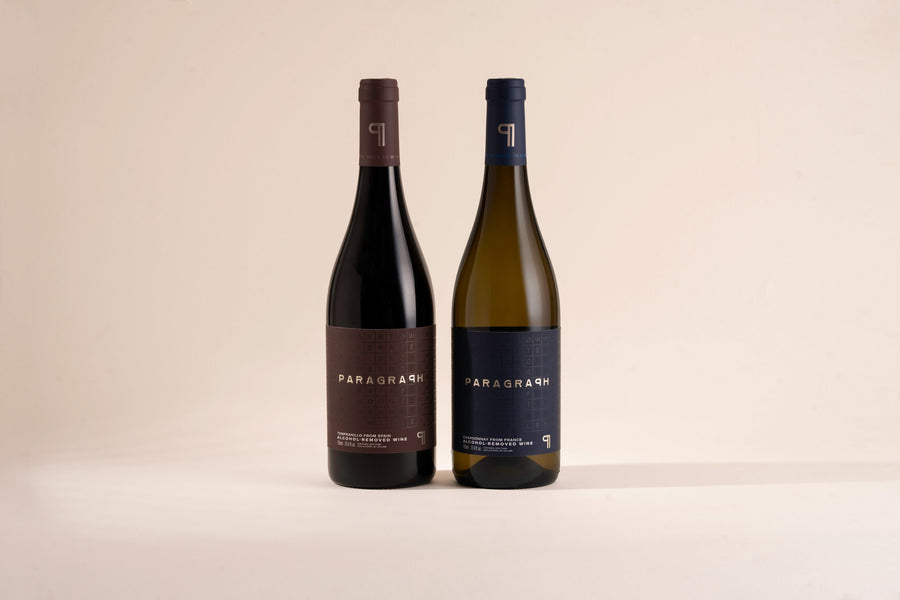
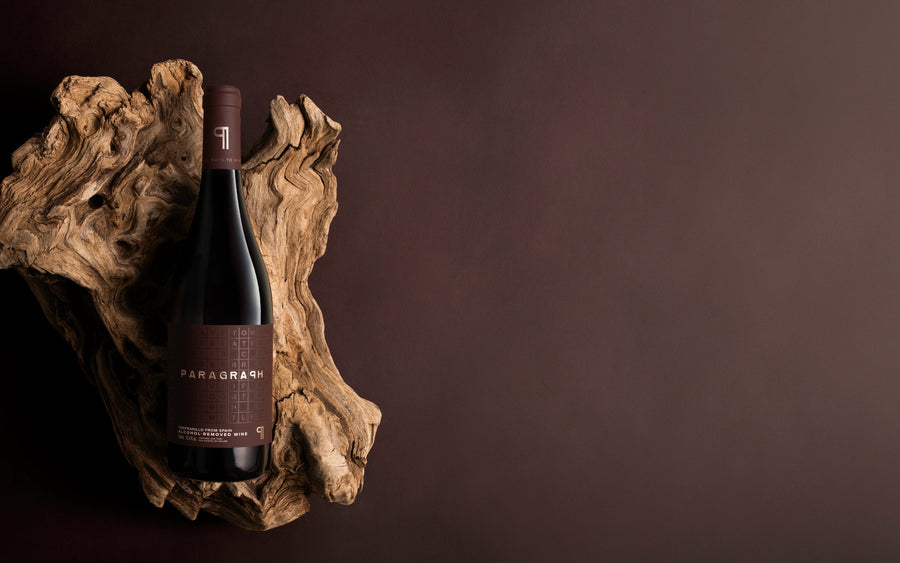
PARAGRAPH is built to pass all five checks: 100% Tempranillo, grown in high-altitude Spanish vineyards, fermented fully before the alcohol is removed by vacuum distillation, landing under 0.5% ABV with about 1 g of sugar per 100 mL and 25 calories per 5 oz (148 mL) serving. The identity term on the label is "alcohol-removed". PARAGRAPH was named Best Non-Alcoholic Wine at the Rolling Stone Spirit Awards 2026. A wine built around these criteria has a claim to "best" because of what is measurable in the glass.
If you want to run the five checks on a bottle, our Tempranillo product page lists the grape, origin, method, ABV and nutrition.
Common questions
What should I look for on a non-alcoholic red wine label?
Look for a named grape, a description of where it is grown, a stated ABV under 0.5%, sugar content near 1 g per 100 mL, and, ideally, the alcohol-removal method used.
Is added sugar bad in a non-alcoholic red?
Added sugar changes the style. Lower sugar, near 1 g per 100 mL, reads as a dry, table-wine style. Higher sugar moves the wine toward something sweeter and less structured.
Why does grape choice matter so much for non-alcoholic red wine?
Grapes with strong natural tannin and good acidity hold their structure best after the alcohol is removed. Full-bodied red grapes grown in conditions that build concentration, like high-altitude vineyards, give the winemaker the most to work with.
What ABV counts as non-alcoholic under US rules?
Under FDA CPG Sec. 510.400, a wine under 0.5% ABV can be labeled "non-alcoholic" as long as "dealcoholized" or "alcohol-removed" also appears in the statement of identity.
How fast is the non-alcoholic wine category growing?
US non-alcoholic wine sales rose 29.1% while total US wine sales fell 4.9% over the same period (NIQ, 2025 year in review), and the US market is projected to reach $2.0 billion by 2033 (Grand View Research, 2025). Only 54% of US adults say they drink alcohol, matching the record low set the year before (Gallup, July 2026), and the figure is 50% among adults aged 18 to 34.

Duncan Shouler
Head Winemaker at PARAGRAPH, formerly Chief Winemaker at Giesen. Duncan has spent eight years making alcohol-removed wine.
More from Duncan