How Is Non-Alcoholic Wine Made?
Non-alcoholic wine starts as full-strength wine. Winemaker Duncan Shouler explains vacuum distillation, the spinning cone and the 0.5% ABV rule.

Non-alcoholic wine is made by fermenting a full-strength wine first, then removing the alcohol. Two methods do this without cooking the wine: vacuum distillation and the spinning cone column. Both pull the alcohol out at low temperature so the aroma stays. The finished wine must sit under 0.5% ABV to carry a "non-alcoholic" label in the US.
I get this question more than any other, usually from someone holding a glass and eyeing it with suspicion. Fair enough. The line I give them at tastings is the one I will put in writing here: "Nothing about this wine starts out non-alcoholic. It starts as wine, made the way wine has always been made, and the alcohol comes out later."
You make full-strength wine first
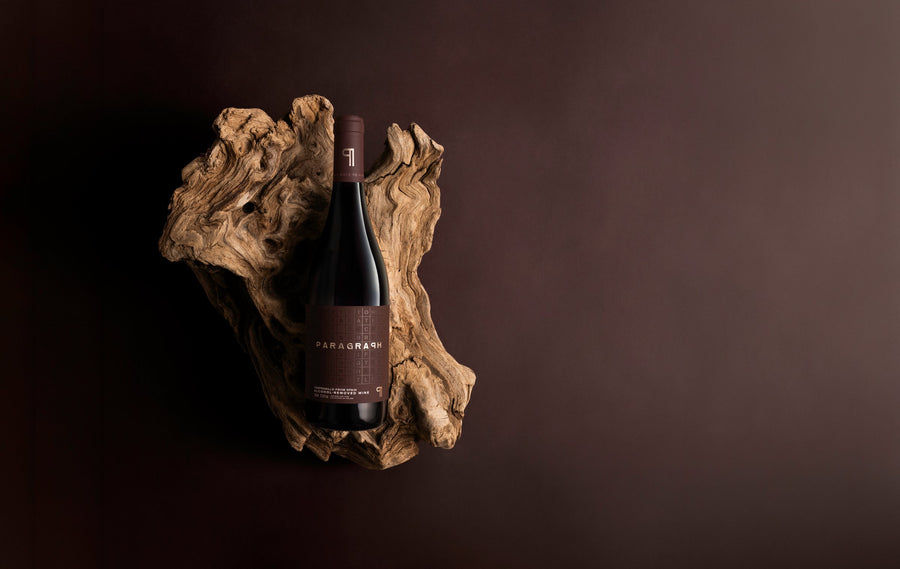
Every bottle of PARAGRAPH begins as a finished, fermented wine. We select Tempranillo base wines from high-altitude Spanish vineyards. At this stage it is wine, with a normal alcohol level, and it tastes like it.
The alcohol removal happens after fermentation is done and the wine has taken its shape. This order matters. Alcohol carries flavor compounds during fermentation and helps extract color and tannin from the grape skins. A drink built without that step is grape juice with wine flavoring added, and it tastes like a different product.
Two methods take the alcohol out at low temperature
Two methods dominate serious non-alcoholic winemaking, and both work on the same principle: separate alcohol from water and aroma without heat damage.
Vacuum distillation lowers the air pressure around the wine so the alcohol boils off well below the 78°C it needs at sea level. This is the method we use for PARAGRAPH. Our still runs at about 30°C. The lower temperature keeps the aroma compounds that give Tempranillo its character largely intact. They stay in the wine.
The spinning cone column works on a similar idea with different mechanics. The wine spins into a thin film across a stack of rotating cones inside a vacuum chamber, which increases the surface area exposed to a countercurrent of nitrogen or steam. This strips alcohol out in stages, catching aromatic compounds separately and adding some of them back afterward. It is a proven, widely used method in the category, and some excellent non-alcoholic wines use it. I compare the two in detail in spinning cone vs vacuum distillation.
Both approaches solve the same problem: heat destroys aroma, and traditional distillation runs hot. Vacuum lets you pull the alcohol out at a temperature the wine can survive.
Heat is what destroys aroma
Wine aroma comes from volatile compounds, the same molecules that make a wine smell like cherry, leather or fresh herbs. These compounds break down or evaporate at high heat. If you boiled off the alcohol the ordinary way, you would lose most of what makes the wine smell and taste like wine, and you would be left with something closer to cooked grape juice.
Running the process under vacuum protects those compounds, and that is the reason this category has become something worth drinking on its own terms. The US non-alcoholic wine market reached about $1.1 billion in 2025 and is projected to reach $2.0 billion by 2033, an 8.4% annual growth rate (Grand View Research, 2025). People buy it because it can taste like the wine they would otherwise drink.
Under 0.5% ABV is the labeling line
After distillation the wine still carries a trace of alcohol, under 0.5% ABV. That figure is the recognized US threshold for labeling an alcohol-removed wine as "non-alcoholic". The FDA's guidance (CPG Sec. 510.400) permits the term on a wine that has had its alcohol removed and sits below 0.5%, as long as the statement of identity also says "dealcoholized" or "alcohol-removed". That is why "alcohol-removed" is the identity term on the PARAGRAPH label. The trace that remains is in the same range you find in a ripe banana or a slice of bread, both products of natural fermentation. I cover the number itself in is non-alcoholic wine 0% alcohol.
Category growth backs up the shift. Non-alcoholic wine sales grew 29.1% while total US wine sales fell 4.9% over the same period (NIQ, 2025 year in review), and US non-alcoholic drinks crossed $1 billion in off-premise sales, up 22% (NIQ, 2025). More people choose this style of wine on purpose.
If you want to taste what careful vacuum distillation keeps, our Tempranillo is the wine we built to show it.
Common questions
Does non-alcoholic wine start as grape juice?
No. It starts as fully fermented wine, made the same way any wine is made, with alcohol present through fermentation. The alcohol is removed after fermentation is complete.
Is heat used to remove the alcohol?
Some heat is involved, but vacuum distillation and the spinning cone column both run at much lower temperatures than standard distillation by lowering the air pressure. This protects aroma compounds that would otherwise break down.
How much alcohol is left after the process?
Under 0.5% ABV, the threshold the FDA recognizes for labeling a dealcoholized wine as "non-alcoholic".
Is vacuum distillation better than the spinning cone?
Both remove alcohol at low temperature. We use vacuum distillation for PARAGRAPH because it fits how we want to protect Tempranillo's structure and aroma. Other producers get strong results with the spinning cone.
Why does a producer ferment a full wine first?
Fermentation is where wine gets its structure, tannin and depth. A flavored drink built without it tastes thinner and less complex.

Duncan Shouler
Head Winemaker at PARAGRAPH, formerly Chief Winemaker at Giesen. Duncan has spent eight years making alcohol-removed wine.
More from Duncan