Is Non-Alcoholic Wine 0% Alcohol?
Most non-alcoholic wine sits under 0.5% ABV, a trace above zero. Winemaker Duncan Shouler explains what that number means and how it compares to food.


No. Most non-alcoholic wine, including PARAGRAPH, sits under 0.5% ABV, a trace left after the alcohol is removed. That figure is the threshold the FDA recognizes for labeling an alcohol-removed wine "non-alcoholic". The trace is similar to what occurs naturally in ripe fruit or fresh bread, and far below any full-strength wine or alcoholic drink.
People ask me this directly, so I answer it directly, and the line I use is this: "Non-alcoholic is a labeling term. It describes a wine that had its alcohol taken down to a trace, and the trace is under 0.5%."
Under 0.5% means a measured trace
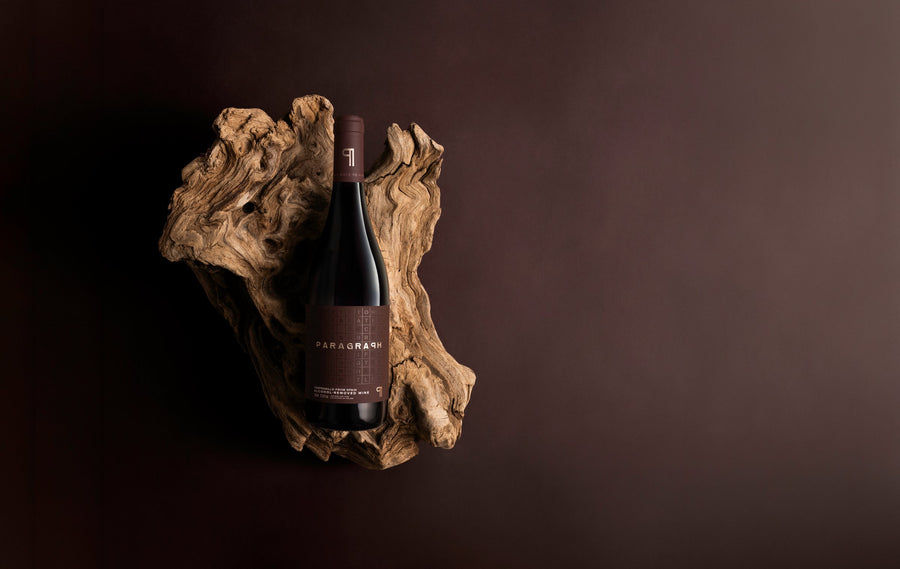
PARAGRAPH starts as a fully fermented Tempranillo, made the normal way, then has its alcohol removed through vacuum distillation. That process pulls out the vast majority of the alcohol. Distillation of any kind leaves a residue, and what remains here is a trace, under 0.5% ABV. How the alcohol comes out is covered step by step in how non-alcoholic wine is made.
For perspective, a standard glass of red wine runs around 13% to 14% ABV. A wine under 0.5% ABV carries less than 1/27th of that. You would need to drink an entire bottle in one sitting to take in the alcohol of a few sips of regular wine.
Trace alcohol shows up in everyday food
Fermentation happens naturally in a lot of foods, and small amounts of alcohol show up as a byproduct.
Ripe fruit continues to ferment as its sugars break down, and overripe bananas or grapes can carry small amounts of alcohol before anyone does anything to them. Bread rises because yeast ferments sugar in the dough, and a portion of the alcohol produced during that rise survives baking. Kombucha, a fermented tea, can carry enough residual alcohol from its culture that some batches test above the 0.5% line, which is why kombucha labeling has drawn its own regulatory attention in recent years.
Trace alcohol from natural fermentation is common enough in everyday food and drink that regulators set a workable threshold at 0.5%. A zero standard would rule out bread.
"Dealcoholized" means the wine was fermented first
"Dealcoholized" describes a wine that was fully fermented like any other wine, then had its alcohol removed afterward through a physical process such as vacuum distillation or the spinning cone column. A grape drink that never fermented is a different product. Dealcoholized wine goes through the entire winemaking process, including fermentation, skin contact and aging decisions, before the alcohol comes out.
The FDA's guidance (CPG Sec. 510.400) requires that a wine labeled "non-alcoholic" also carry a term like "dealcoholized" or "alcohol-removed" in its statement of identity when it falls under 0.5% ABV. That pairing is meant to be transparent: the label tells you both that the alcohol level is low and that alcohol was present and then taken out. On the PARAGRAPH label the identity term is "alcohol-removed".
More adults are choosing to drink less
Only 54% of US adults say they drink alcohol, matching the record low set the year before in the poll's 90-year history (Gallup, July 2026). Among adults aged 18 to 34 the figure is 50%, and 51% of adults now say one or two drinks a day is bad for health. At the same time, the US non-alcoholic wine market reached about $1.1 billion in 2025 and is projected to reach $2.0 billion by 2033 (Grand View Research, 2025). A growing number of people pick this style of wine on purpose.
If the process behind that trace number interests you, it is the process behind every bottle of our Tempranillo.
Common questions
Does non-alcoholic wine have zero alcohol?
No. It typically carries under 0.5% ABV, a trace left over from the dealcoholization process.
What does "dealcoholized" mean on a label?
It means the wine was fully fermented, like any other wine, and then had its alcohol removed afterward through a process like vacuum distillation.
Is 0.5% ABV higher than what is in bread or ripe fruit?
It is roughly comparable. Natural fermentation in foods like bread and ripe fruit can produce similar trace levels of alcohol without anyone adding it on purpose.
Why doesn't the industry claim 0.0%?
Distillation removes almost all the alcohol and leaves a trace. The under-0.5% threshold is the regulator-recognized standard for what this process achieves reliably.

Duncan Shouler
Head Winemaker at PARAGRAPH, formerly Chief Winemaker at Giesen. Duncan has spent eight years making alcohol-removed wine.
More from Duncan